You Bought the Furniture — Now Get It to Your Country
For international buyers sourcing from Foshan, the logistics chain is where margins are won or lost. A 40HQ container holds roughly 25–35 sofas depending on knockdown design, but poor loading can reduce that by 20% and increase damage claims by double digits. Understanding the shipping pipeline before you place your PO prevents expensive surprises.
Incoterms That Matter for Furniture Buyers
FOB (Free On Board) is the standard for most Foshan factories. Under FOB terms, the supplier is responsible for getting goods through Chinese customs and onto the vessel. Once loaded, risk transfers to the buyer. For first-time buyers, this means you need a freight forwarder on your side — the factory’s forwarder may not prioritize your cost optimization.
CIF (Cost, Insurance, Freight) bundles shipping and insurance into the supplier’s invoice. The convenience premium is typically 8–15% versus arranging your own freight. CIF makes sense for small trial orders under 20 CBM. For container-load orders, arranging your own FOB freight almost always costs less.
EXW (Ex Works) shifts all responsibility to the buyer from the factory gate. Only choose EXW if you have a China-based logistics partner who can handle factory pickup, export documentation, and customs clearance.
Container Loading Math
A standard 40HQ container measures 12.03m × 2.35m × 2.69m (approximately 76 CBM). Knockdown sofas in flat-pack cartons typically consume 2.0–2.8 CBM each. Fully assembled sofas can take 4–6 CBM each — which is why most commercial OEM orders specify KD (knockdown) packing. A well-packed 40HQ carrying KD dining sets can fit 30–40 sets; the same container with assembled goods might only fit 15–20.
Packaging Standards That Prevent Damage
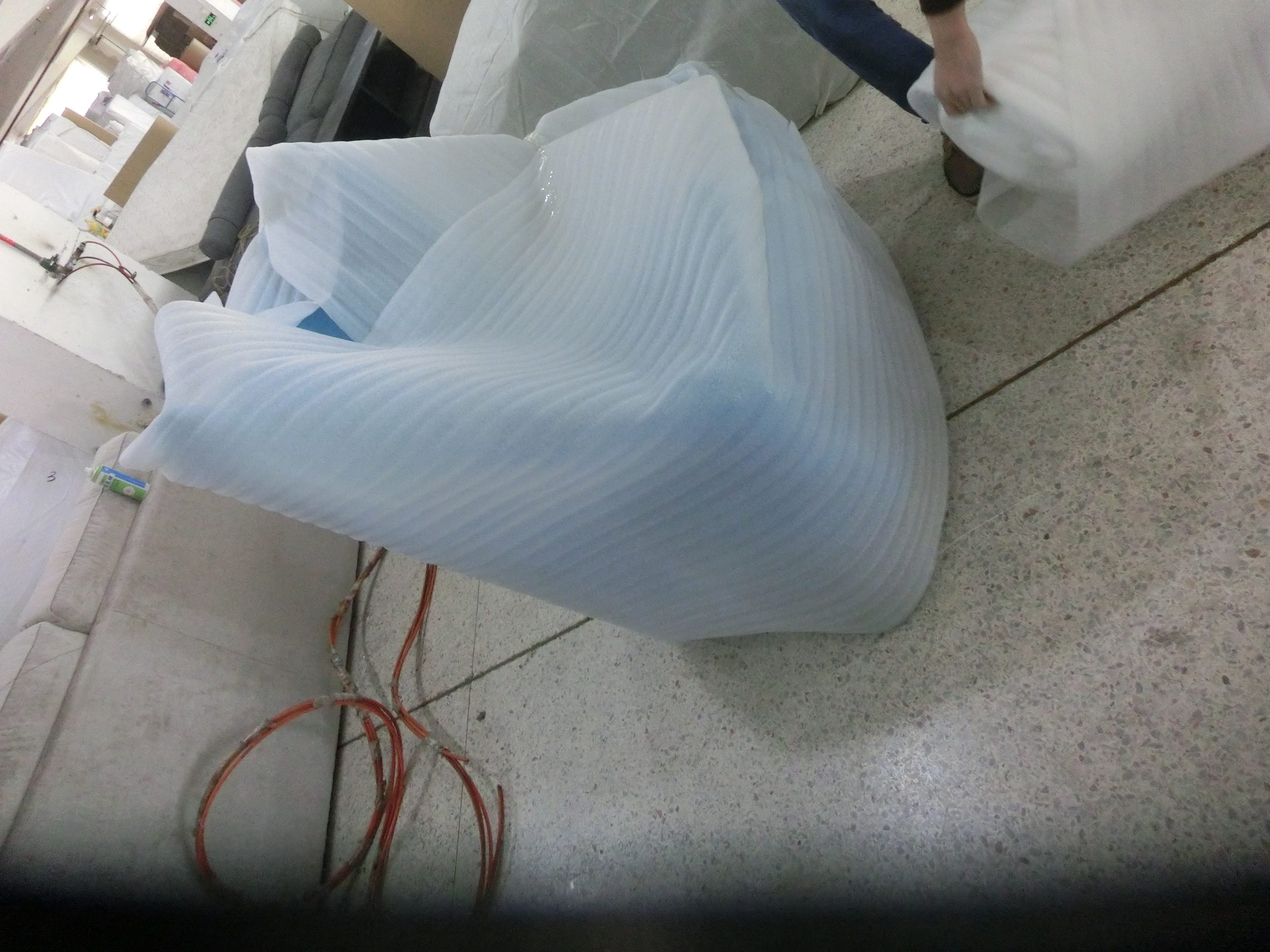
Hotel furniture travels further and handles more rough than residential orders. Minimum packaging should include: 5-layer corrugated export cartons with edge protectors, foam wrapping on all finished surfaces, plastic bag inner wrap for moisture protection, and palletized loading with stretch wrap. Furniture shipped without pallets averages 3–5% damage rates; palletized loads drop that to under 1%.
For upholstered goods, vacuum compression packaging can reduce volume by 30–40%, which translates directly to freight savings. However, compression beyond 48 hours before unpacking risks permanent foam deformation.
Documentation Checklist
- Commercial Invoice with HS codes specific to each item type
- Packing List with carton numbers, dimensions, and weights per SKU
- Bill of Lading (for sea freight) or Air Waybill (for air freight)
- Certificate of Origin for duty reduction
- Fumigation Certificate if your order includes solid wood components
- Product testing reports (flammability, structural) if required by your destination market
Contact our logistics team for a shipping estimate on your next container order.