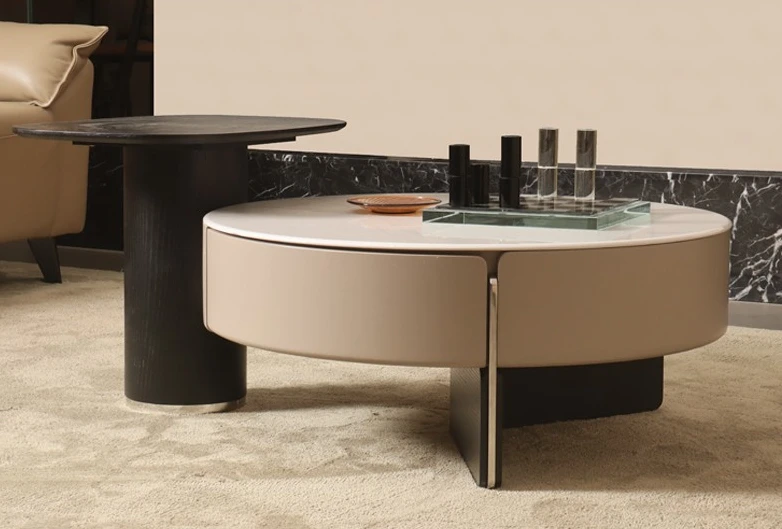
The Tabletop Takes Everything Guests Throw at It
Room service trays, hot coffee cups, luggage, wet glass rings, and the occasional shoe — hotel coffee table surfaces endure abuse that residential tables never see. The surface material choice determines not just aesthetics but cleaning protocol compatibility, refinishing feasibility, and replacement cycle timing.
Wood Veneer — The Classic, With Caveats
Natural wood veneer on an MDF or plywood substrate offers warmth that designers love, but hotel use exposes its weaknesses. Water rings from cold drinks penetrate any finish within 12–18 months of commercial use unless the table receives a catalyzed conversion varnish (CV) or UV-cured topcoat — not standard lacquer or polyurethane. Specify CV finish with a minimum 35° sheen (semi-gloss) which hides micro-scratches better than high-gloss. Veneer tables require coasters in every room to reach even a 3-year service life.
Tempered Glass — Maximum Durability, Specific Styling
8–10mm clear or tinted tempered glass tops are effectively scratch-proof and fully cleanable with any hotel-grade disinfectant. They survive hot items, wet items, and impact that would dent wood. The trade-off: glass shows fingerprints within hours, requires daily wiping, and reads as modern or minimalist — it photographs poorly in traditional interiors. Edge finishing matters: polished flat edges with a 1mm chamfer prevent chipping.
Marble and Engineered Stone — Luxury With Maintenance Burden
Natural marble tops make a statement in luxury suites, but marble is porous, acid-sensitive, and stains irreversibly from red wine, coffee, and citrus. Sealing marble reduces but does not eliminate this risk — resealing is required every 6–12 months in hotel use. Engineered quartz (93% quartz aggregate with resin binder) offers the marble look with zero porosity and no sealing requirement, at approximately 60–70% of natural marble cost.
Metal Finishes — Powder Coat vs Electroplating
Powder-coated steel or aluminum table bases and frames are standard for commercial use. A polyester powder coat rated for indoor use achieves 2H–3H pencil hardness and resists scratching. Electroplated finishes (chrome, brass, nickel) offer higher visual impact but show scratches more readily — specify PVD (Physical Vapor Deposition) plating for the best scratch resistance in electroplated finishes.
Browse our hotel coffee table collection with surface material options configurable by property tier.