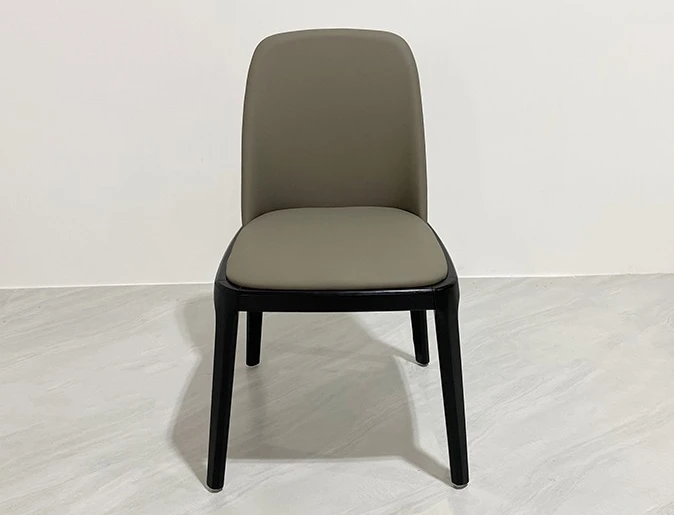
Food, Wine, and 300 Covers a Night
A fine-dining restaurant chair may seat 300–400 guests per week. Each guest represents a spill risk. The upholstery material on your dining chair is the single largest determinant of housekeeping labor cost and replacement frequency. A chair that takes 5 minutes to clean versus 30 seconds adds 30+ labor hours per month in a 100-seat restaurant. Material choice is an operational decision, not just a design one.
Vinyl and Polyurethane — The Cleanability Champions
Contract-grade vinyl with a protective topcoat cleans with a single wipe using standard quaternary ammonium disinfectants. It resists red wine, coffee, oil, and most acidic sauces without staining — provided the spill is wiped within 30 minutes. The performance threshold: bleach-cleanable vinyl rated for 10% sodium hypochlorite solution withstands the harshest cleaning protocols without degradation.
The trade-off: vinyl can feel sticky in humid environments and does not breathe. For outdoor or semi-outdoor dining areas, marine-grade vinyl with UV inhibitors and antimicrobial treatment is the correct specification.
Performance Woven Fabrics — Breathable and Bleachable
Solution-dyed acrylic and polyester blends from mills like Sunbrella, Brentano, or Architex offer a fabric hand feel with vinyl-level cleanability. These fabrics are inherently stain-resistant because the color is embedded in the fiber during extrusion — not surface-dyed. Bleach-cleanable performance fabrics can withstand 1:5 bleach solution cleaning. The cost premium over vinyl is 30–50%, but the guest comfort difference is noticeable in seated dining exceeding 60 minutes.
Wood and Metal Seats — Zero Upholstery, Maximum Hygiene
Solid wood seats with a CV finish and fully-welded metal seats represent the zero-maintenance end of the spectrum. Quick-service restaurants and high-volume casual dining increasingly specify all-wood or metal seating to eliminate upholstery replacement entirely. Add a contoured seat pan — not flat — to improve comfort without adding upholstery.
Seat Cushion Construction for Replaceability
Specify removable seat cushions with zippered covers — not stapled upholstery. When a cushion gets stained beyond cleaning, housekeeping can swap the cover in under 2 minutes. Keep 10–15% spare covers in inventory. The zipper should be heavy-duty nylon coil (#5 or larger) with a metal pull, hidden on the underside. Stapled cushions cost 3–4× more over a 5-year lifecycle when factoring in complete reupholstery labor.
View our restaurant dining chair catalog with cleanability specifications and spare cover ordering.