Export furniture packaging should protect the product through factory handling, container loading, ocean transport, unloading and final delivery. The correct method depends on product construction, surface finish, fragility, destination and distribution model.
Packaging Specification
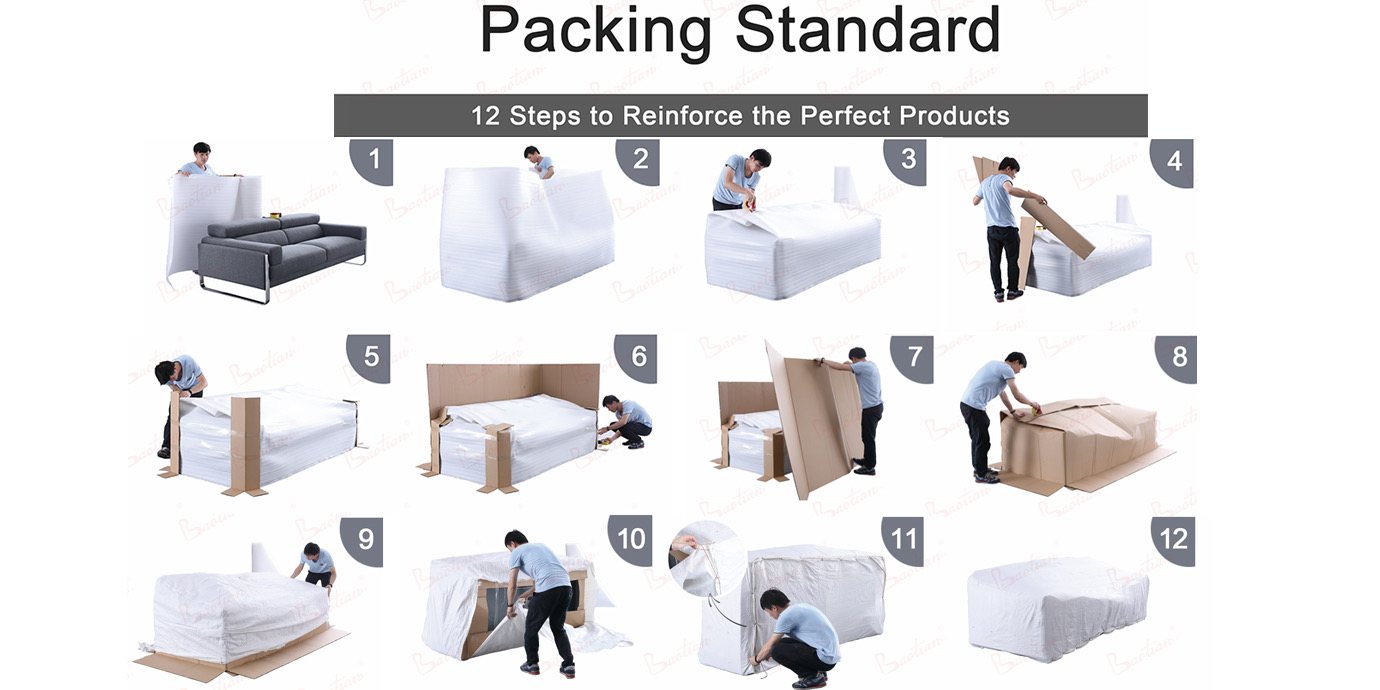
A packaging specification should identify protection materials, carton construction, hardware location, assembly instructions, labels, carton marks and any pallet requirement. Photographs of the approved packed sample provide a useful repeat-order reference.
- Protect exposed corners, legs, edges and finished surfaces
- Separate hardware so it cannot damage the product
- Control movement inside the carton
- Use clear product, model and quantity identification
- Confirm handling and storage warnings where needed
Product-Specific Risks
Upholstered furniture needs protection from abrasion, compression and contamination. Glass and stone-look tops need edge and impact protection. Knock-down tables and beds need controlled hardware packs and assembly instructions. Mattresses require packaging suited to their construction and recovery requirements.
Container Loading Plan
Loading calculations should use approved packed dimensions, not only finished product dimensions. Before shipment, confirm carton count, gross volume, orientation, stacking limits, mixed-model sequence and destination unloading needs.
Container quantity may change after product customization or packaging approval. Treat preliminary loading figures as estimates until the final packed specification is confirmed.
Buyer Checklist
- Are packed dimensions and gross weight recorded?
- Are labels, barcodes and carton marks approved?
- Are hardware and instructions included and protected?
- Is the loading sequence suitable for unloading?
- Are packing photographs and the final packing list available?
Read our furniture shipping guide or send your destination and packaging requirements.
Related buyer resources
Use these guides together when preparing an OEM/ODM furniture project, from specification review through production, inspection, packing and shipment.