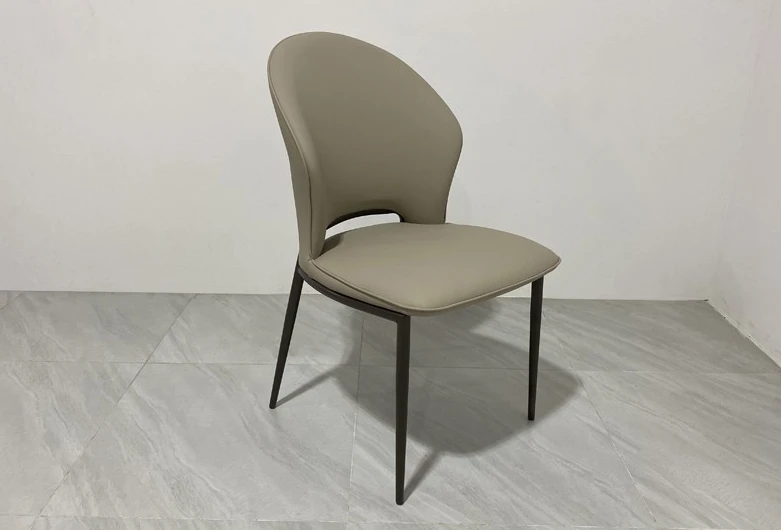
The Frame Material Sets the Chair’s Service Life
Restaurant dining chairs experience high-frequency movement: pulled out, pushed in, dragged, stacked, cleaned, and leaned on hundreds of times per week. Upholstery can be replaced, but a failed frame usually means the chair leaves service. Choosing restaurant dining chair frame materials should start with the venue format, not only the interior style.
Solid Wood Frames
Solid beech, ash, and rubberwood frames are popular because they feel warm and suit many hospitality interiors. Beech is a common commercial choice because it machines well, holds screws, and bends predictably when steam-bent. For restaurant use, wood frames should use mortise-and-tenon or dowel joints with glue, reinforced by corner blocks where possible.
The risk is moisture and cleaning chemicals. Chair legs near mopped floors can absorb water if the finish is poor or if glides are missing. Specify sealed leg ends and replaceable glides. For darker restaurant environments, medium or dark stains hide scuffs better than natural finishes.
Steel Frames
Steel is the strongest and most predictable frame material for high-turnover venues. Welded steel chairs can be slim, stable, and long-lasting. Powder-coated finishes provide good scratch resistance and allow many color options. Steel is heavier than aluminum, which helps stability but makes daily repositioning harder for staff.
For commercial quality, check tube thickness, weld cleanliness, and whether the underside is fully coated. Thin steel tubes may dent when chairs hit table bases or walls. Poor welds often fail at the rear leg connection, especially when guests lean backward.
Aluminum Frames
Aluminum is valuable for outdoor dining, rooftop restaurants, and flexible spaces where staff move furniture frequently. It resists corrosion better than ordinary steel and weighs much less. However, aluminum needs larger tube profiles or internal reinforcement to match steel stiffness. For outdoor use, specify powder-coated or anodized aluminum and UV-resistant seat materials.
Bentwood and Hybrid Designs
Bentwood chairs offer iconic café styling and excellent comfort when made correctly. The quality depends on controlled steaming, bending radius, and laminated construction. Cheap bentwood chairs can split at curves or loosen at screw points. Hybrid chairs — metal frame with wood seat/back, or wood frame with metal stretchers — often deliver the best balance between appearance and durability.
Material Selection by Venue
- Fine dining: solid wood or upholstered wood frame
- Casual dining: powder-coated steel or hybrid frame
- Outdoor dining: aluminum with UV-stable materials
- Banquet/event: lightweight stackable steel or aluminum
- Café: bentwood or metal frame depending on turnover
Explore Baotian dining chairs by frame material, finish, upholstery, and commercial use case.