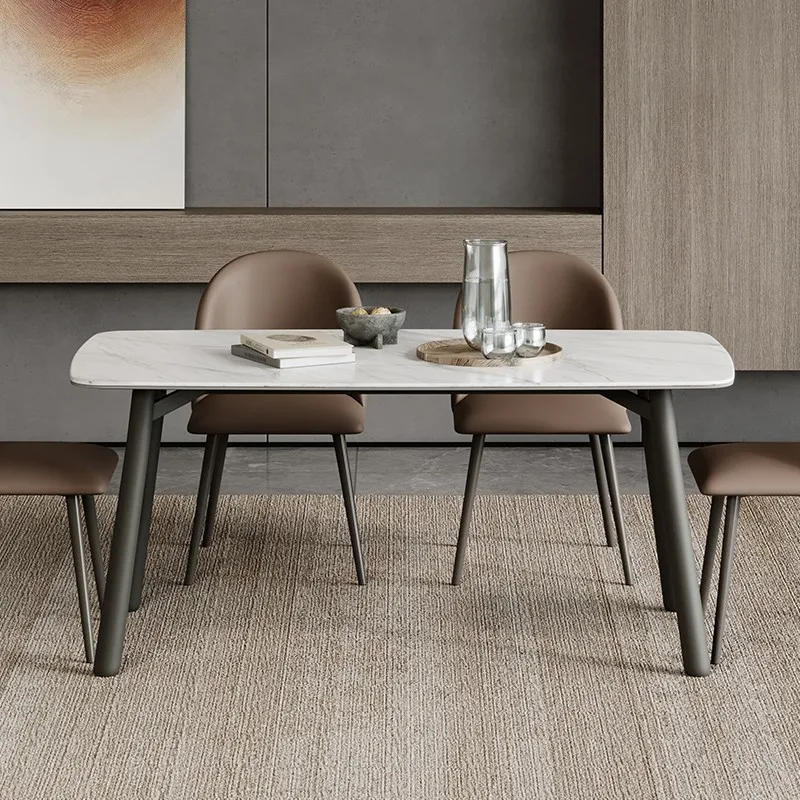
Why Commercial Dining Tables Are Engineered Differently
A restaurant dining table endures hundreds of covers per week: hot plates, spilled liquids, cleaning chemicals, and the occasional guest leaning their full weight. A residential table fails this test within the first quarter. Commercial-grade tables are designed from the base up for stability under load, finish resilience, and rapid sanitization between turns.
Table Top Materials: Laminate, Solid Wood, Veneer, and Stone
High-pressure laminate (HPL) tops dominate quick-service and mid-market restaurants—affordable, stain-proof, and available in endless decors. Specify a minimum 0.7mm laminate thickness with moisture-resistant substrate. Solid wood tops (oak, walnut, acacia) are the choice for fine dining and boutique hotels, but require periodic re-oiling. Faux-marble sintered stone offers luxury aesthetics with superior heat and scratch resistance—ideal for high-end hotel restaurants.
Base Systems: Stability, Aesthetics, and Floor Plan Flexibility
A 4-leg base with adjustable leveling feet is the most stable and cost-effective option. Cast-iron or steel pedestal bases save floor space and suit round tables up to 120cm diameter. For banquet halls, specify folding-leg or flip-top bases with locking castors for rapid reconfiguration. Always confirm the base footprint does not obstruct chair placement at the table edges.
Procurement Specification Checklist
- Top material: HPL (0.7mm+), solid hardwood, or sintered stone
- Base: steel legs with leveling feet, or cast-iron pedestal
- Edge profile: eased or bullnose edge, no sharp 90° corners
- Finish: commercial-grade sealant, food-safe where applicable
- Size standards: 60x60cm (2-seat), 70x120cm (4-seat), 90x180cm (6-8 seat)
- Weight capacity: 200kg distributed load minimum
Explore our commercial dining table catalog or request wholesale pricing.
Commercial Dining Table RFQ Checklist
- Top dimensions, thickness and edge profile
- Material, finish and cleaning requirements
- Base type, floor leveling and chair clearance
- Assembly method and replacement hardware
- Packaging method and destination handling
How to Document the Decision
Table selection should be checked against seating capacity, aisle planning and the actual chair width. Heavy tops, stone-look finishes and large bases also change packing, installation and floor-loading considerations.
Include quantities, destination, target schedule and inspection requirements in the RFQ. Review the commercial dining tables or contact Baotian for a project-specific discussion.