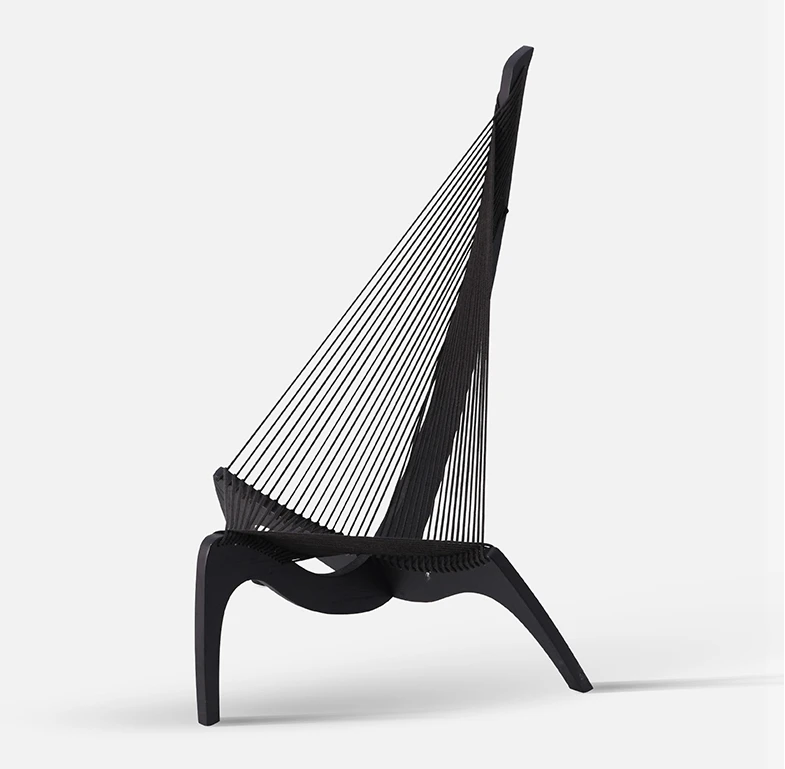
The Backrest Defines Comfort and Visual Presence
In a hotel lobby, a low-back accent chair may suit a quick-wait zone where guests sit for 10 minutes. The same chair in a lounge where guests work on laptops for an hour will generate comfort complaints. Backrest height, shape, angle, and lumbar support separate a chair that feels welcoming from a chair that feels like an afterthought. Accent chair backrest design is an ergonomic decision that affects guest satisfaction and length of stay in public areas.
Backrest Height Options
Low-back chairs (under 50cm backrest height) open sightlines across a lobby and keep the space feeling airy. They are appropriate for short-wait seating near check-in desks, elevators, or concierge stations. Mid-back chairs (50—65cm) provide shoulder support and suit lounge seating where guests may spend 30—60 minutes. High-back chairs (65cm+) offer full upper-body support and create privacy in corners, reading nooks, and cocktail lounges.
Wingback chairs extend the backrest with side panels that block drafts, reduce peripheral noise, and create a cocoon effect. They are effective in large, open lobbies where guests want to feel enclosed within a conversation zone. The wing angle should not block the guest’s peripheral vision entirely, as that can feel claustrophobic.
Lumbar Support in Accent Chairs
Unlike office chairs, accent chairs rarely have adjustable lumbar support. The lumbar curve must be built into the backrest profile: a gentle forward curve between 15—25cm above the seat surface, providing about 2—4cm of projection. Too much lumbar push feels unnatural; too little leaves the lower back unsupported. For high-back chairs, the transition from lumbar curve to upper-back support should be smooth — a sharp angle creates a pressure point between the shoulder blades.
Backrest Angle and Seat Depth Relationship
The backrest recline angle strongly influences posture. An angle of 100—105 degrees from the seat is upright and suitable for short-wait chairs. 105—110 degrees is a relaxed lounge position appropriate for most lobby and guestroom accent chairs. Angles beyond 115 degrees start to feel reclined and work best for reading chairs and loungers. Seat depth works with the backrest angle — a deeper seat combined with a reclined back may leave shorter guests unable to place their feet flat on the floor.
Selection by Hotel Zone
- Reception waiting area: mid-back, 100-105° recline, clean sightlines
- Lobby lounge: mid to high-back, 105-110° recline, lumbar curve built in
- Reading corner or quiet zone: high-back or wingback, 110-115° recline
- Guestroom seating: mid-back, 105° recline, compact footprint
- Specify backrest foam density separately from seat foam — back foam can be slightly softer
Explore Baotian accent chairs with backrest height, angle, and lumbar design options for commercial hotel spaces.