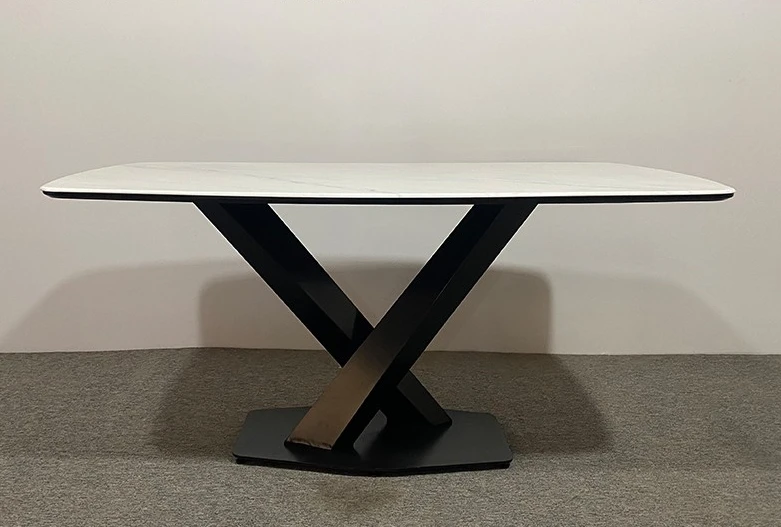
Table Shape Is a Revenue Decision
Round tables seat more people per square meter. Rectangular tables can be pushed together for large groups or separated for couples.
Size-to-Capacity Reference Chart
- Round 90 cm: 2-3 guests
- Round 120 cm: 4-5 guests
- Rectangular 70×120 cm: 4 guests
- Rectangular 90×180 cm: 6-8 guests
Explore our commercial dining table catalog.
A Layout-First Table Selection Framework
Restaurant table shape should be selected from the floor plan outward. The visual style matters, but the operating model matters more: guest circulation, server routes, party-size mix, cleaning time, and the ability to reconfigure the room for groups all affect the total cost of ownership.
| Layout condition | Useful starting point | Trade-off to check |
|---|---|---|
| Narrow circulation routes | Rectangular tables aligned to the room | Protect enough clearance for servers, chairs, and accessibility. |
| Small group dining and social venues | Round tables | Round tops can use floor area less efficiently along walls. |
| Banquet or private-event operation | Rectangular modular tables | Confirm joining hardware and storage requirements. |
| Premium all-day dining | Mixed table sizes and shapes | Keep base styles and finish specifications consistent. |
Measure More Than Seat Count
Start by mapping the clearance required when chairs are occupied, rather than calculating only the number of covers. Allow for back-of-chair movement, service trays, aisle turns, columns, and emergency routes. Then test the plan with the largest chair model under consideration; chair width and arm profile can change a workable layout into a crowded one.
For each proposed table, specify top size, height, edge profile, base footprint, leveling method, finish, and maximum intended seating. In a contract setting, it is also worth checking whether the base allows guests to sit comfortably without knees meeting a central pedestal or crossbar.
Specify for Daily Operation
Restaurant furniture is exposed to repeated cleaning, impact, and movement. Ask suppliers to confirm the recommended care method, finish limitations, replacement-top options, and spare glides. Where tables will be joined frequently, test the joint line and leg positions with the exact chair layout rather than assuming that two standard tops will combine neatly.
For project support, compare relevant dining-table options with matching dining chairs, then send your seating plan through the project inquiry form.
Buyer FAQ
Which shape is more space-efficient? The answer depends on room geometry and circulation. Rectangular tops often work well along walls and in rows; round tops can improve conversation and flexibility in open areas.