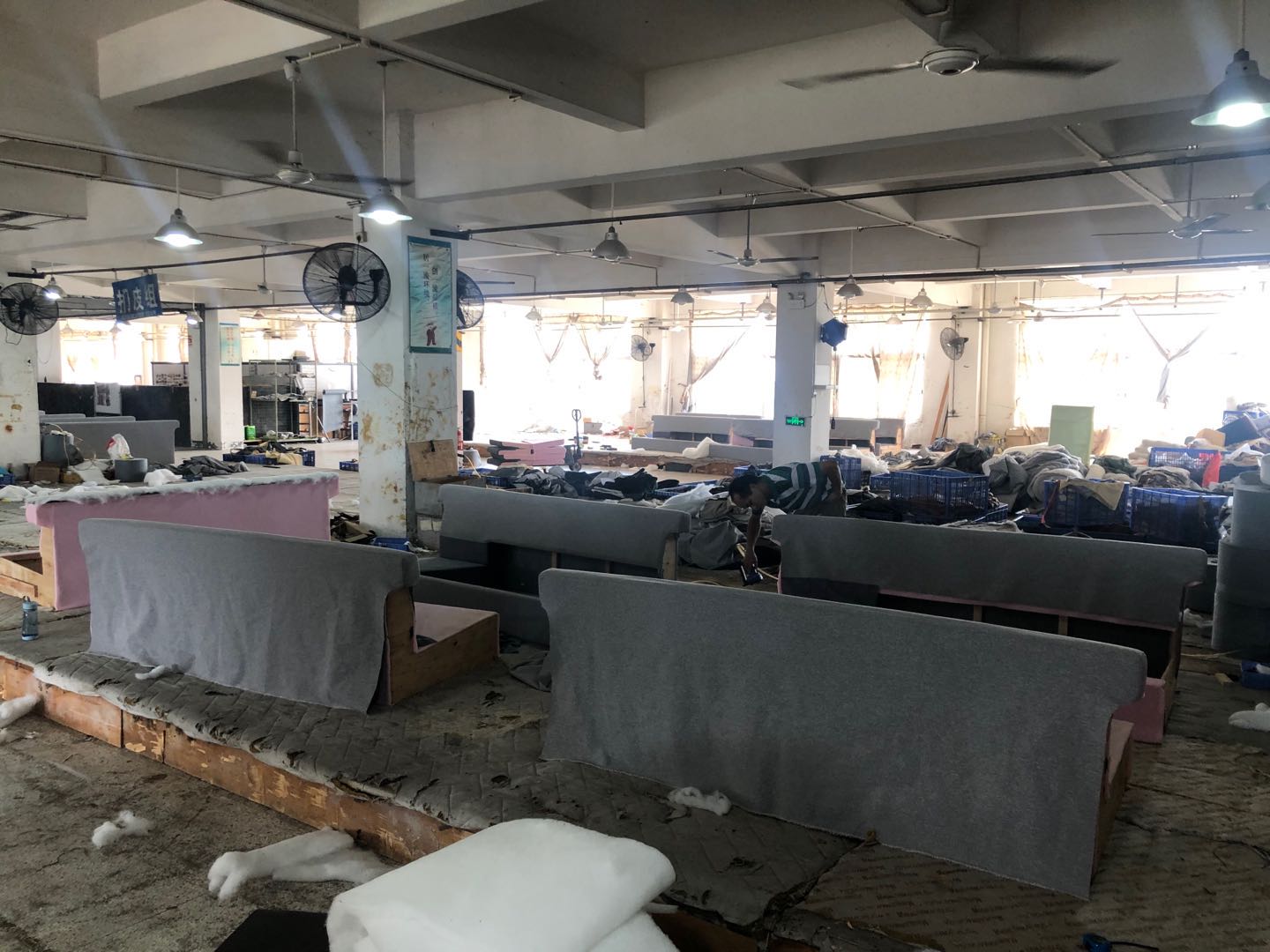
For this Canadian hotel project, Baotian tracked the production of upholstered furniture for 38 guest rooms. The program required the fabric and upholstered construction to be reviewed for flame performance, while the selected fabric also needed abrasion, stain-resistance and antimicrobial-treatment documentation.
This case study records the factory workflow visible in the project photographs: prepared frames and foam, cut upholstery panels, sewing, upholstery assembly, in-process review and finished sofa-bed presentation. The hotel and buyer identities are not published. Test values and certificate numbers are also not stated because they were not included in the supplied project material.
Project at a Glance
| Destination market | Canada |
|---|---|
| Project type | Hotel guest-room furniture production tracking |
| Room count | 38 guest rooms |
| Furniture scope shown | Upholstered sofa and sofa-bed formats, including exposed frames, mattress and mechanism components |
| Material requirements | Fabric and upholstered construction flame-performance review; fabric abrasion, stain-resistance and antimicrobial-treatment requirements |
| Evidence available | Factory photographs of cutting, sewing, upholstery, assembly, in-process units and finished samples |
Documentation note: final compliance depends on the approved fabric, foam, substrate, seam and complete furniture configuration tested for the destination requirement. A material-level statement should not be treated as a complete-product test result.
Translating the Hotel Brief into a Production Plan
A multi-room hotel order needs more than a furniture drawing. Before production, the team aligns the room schedule, model references, dimensions, upholstery codes, foam specification, mechanism or hardware, quantities, labels, packing method and required compliance documents. For this project, flame performance and fabric durability were treated as release requirements rather than as optional post-production checks.
The working file should link each approved fabric and upholstery component to its test scope. That traceability helps the buyer confirm that the fabric tested is the fabric installed, and that any foam, barrier, lining, thread or construction change is reviewed before production continues.
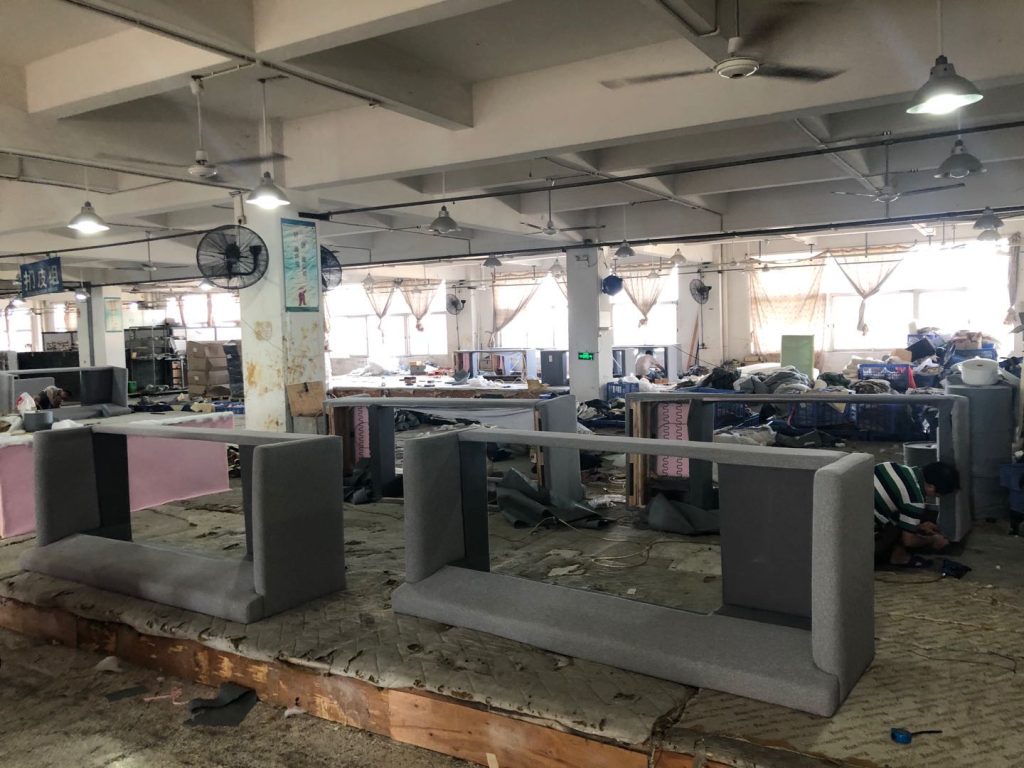
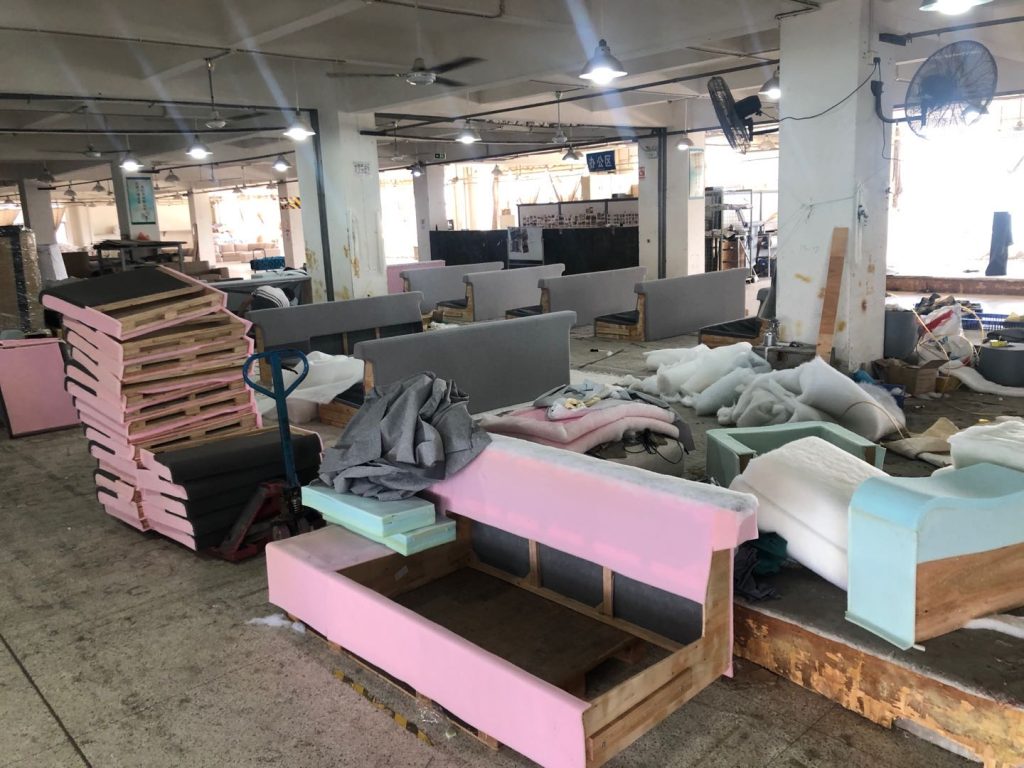
Factory Evidence: From Cut Panels to Upholstered Frames
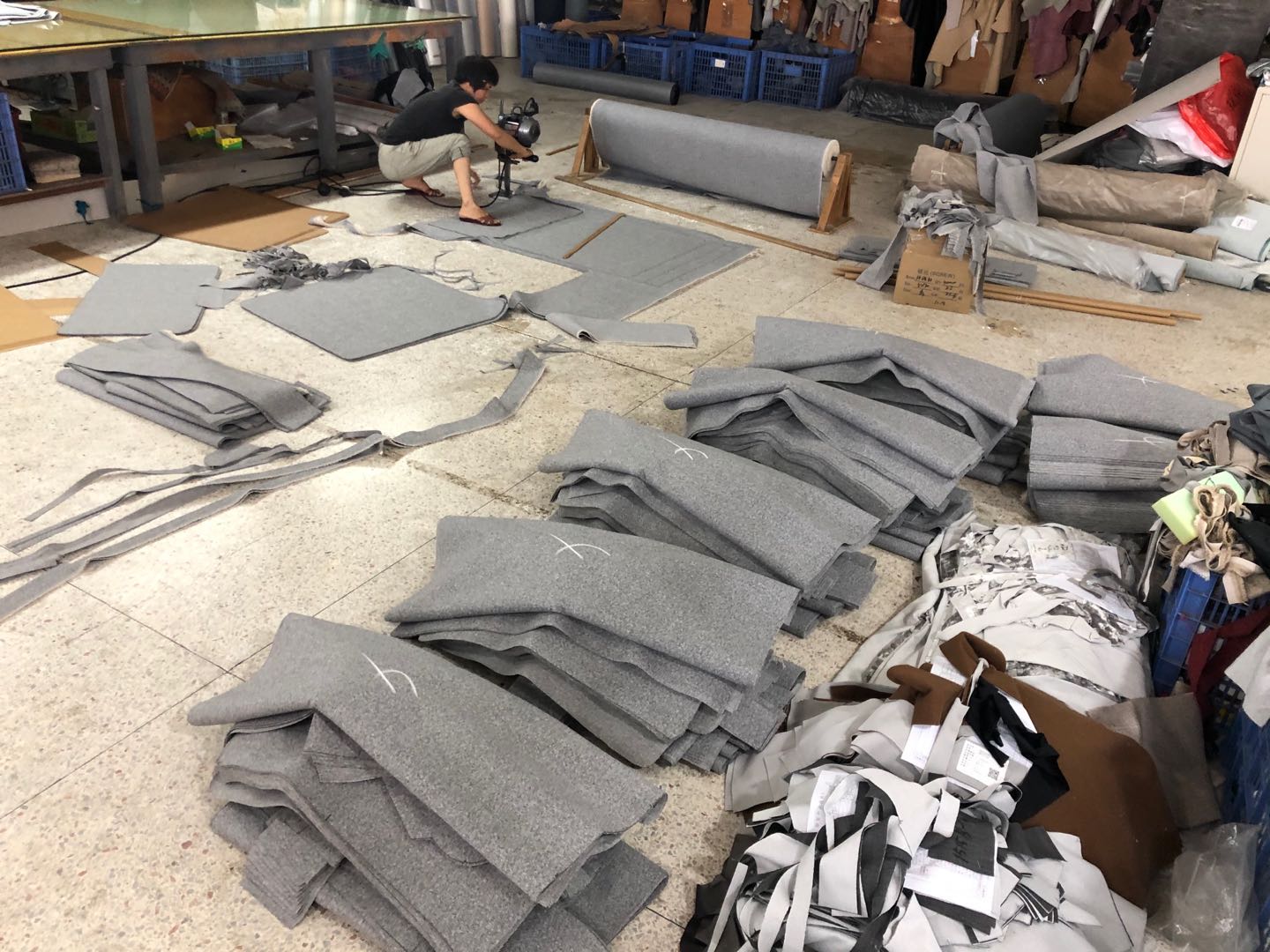
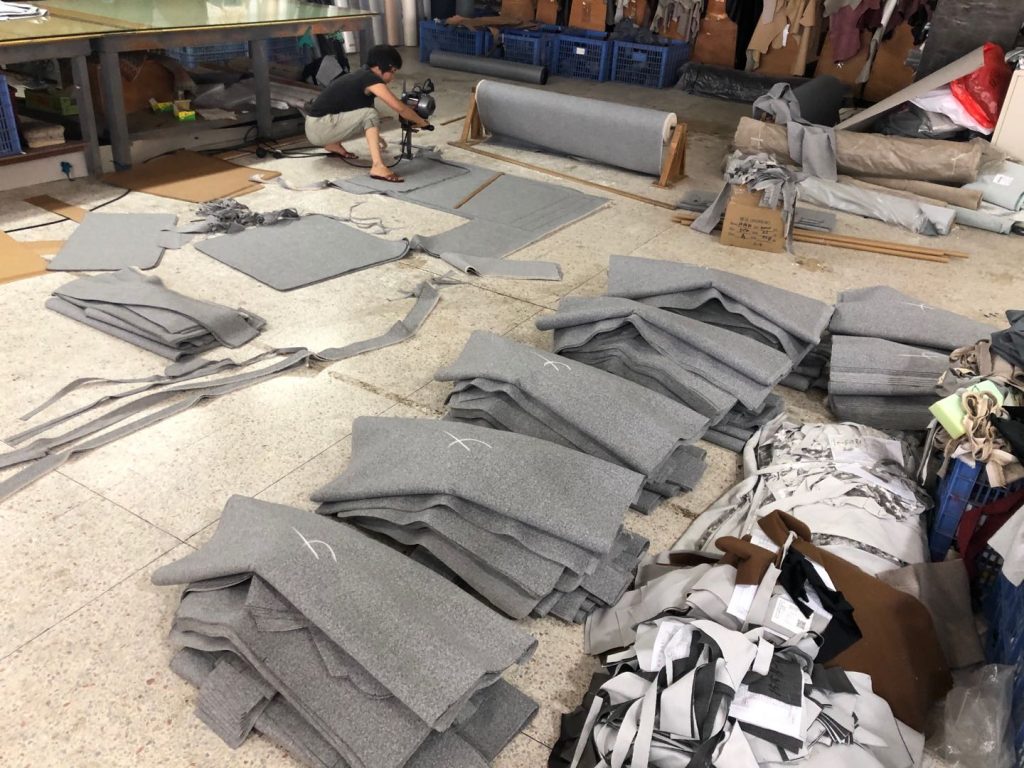
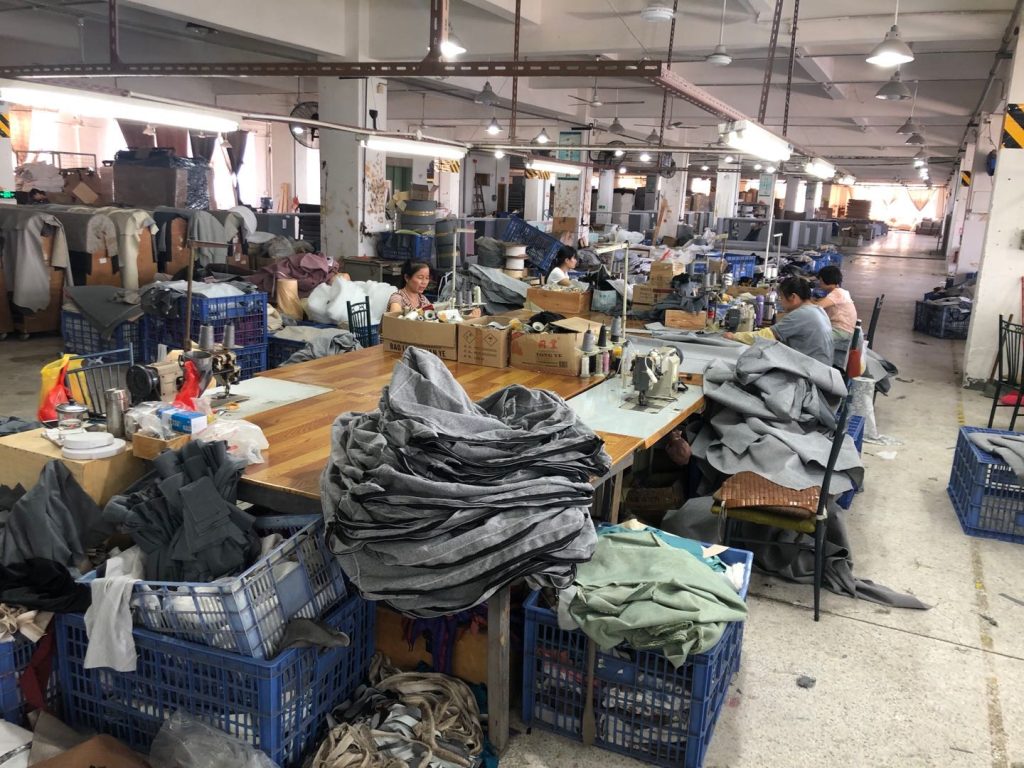
The photographs show cut grey upholstery pieces sorted near the sewing area. Consistent panel identification and grouping are important in a 38-room program because a small pattern, orientation or shade error can repeat across many rooms. The production file should record the fabric code, cutting reference and approved sample against each batch.
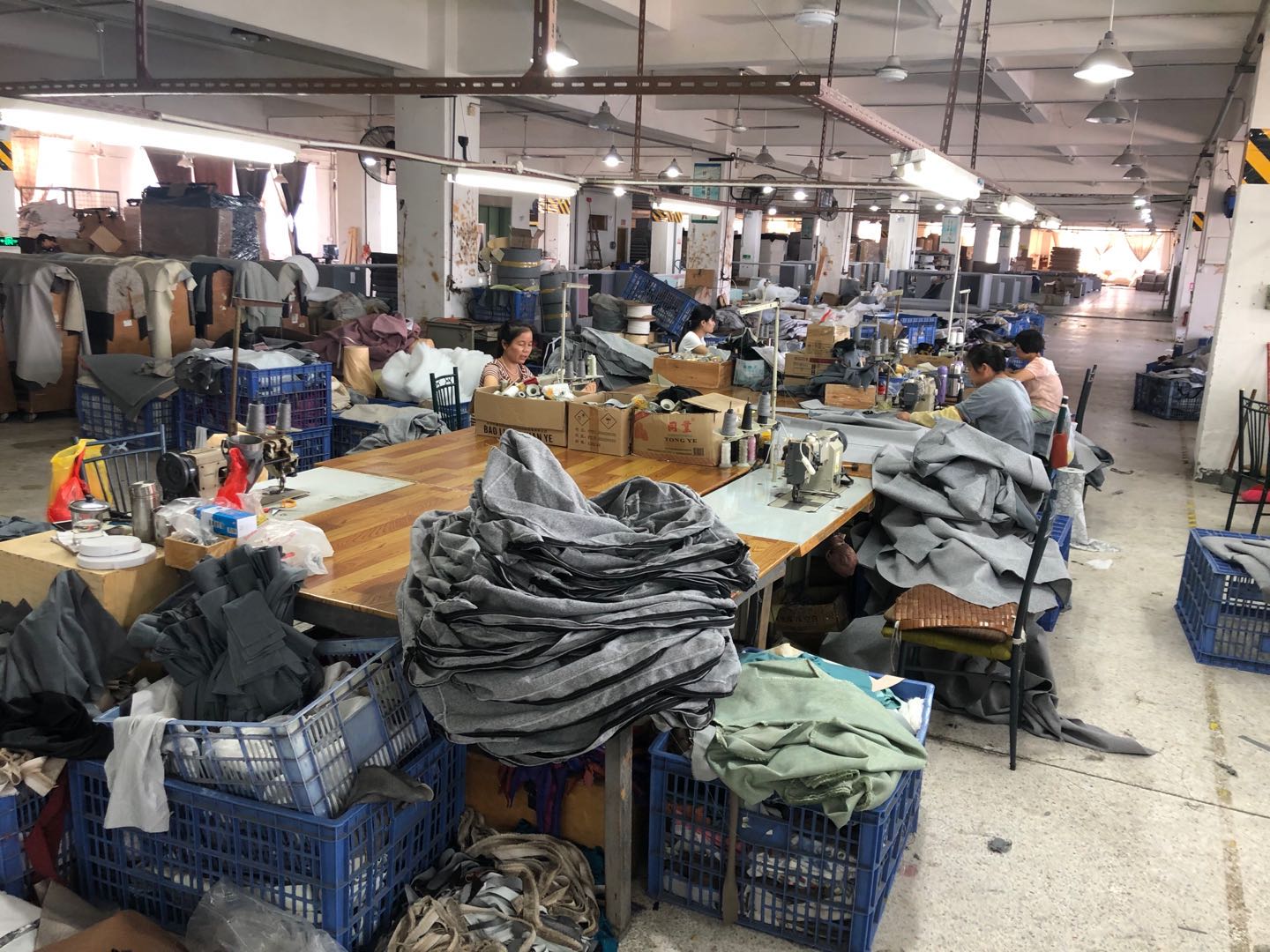
At sewing, operators prepare covers and detail parts to the approved pattern. Checks at this stage focus on seam position, panel orientation, stitch consistency, piping or edge detail and the correct pairing of parts before the cover moves to upholstery.
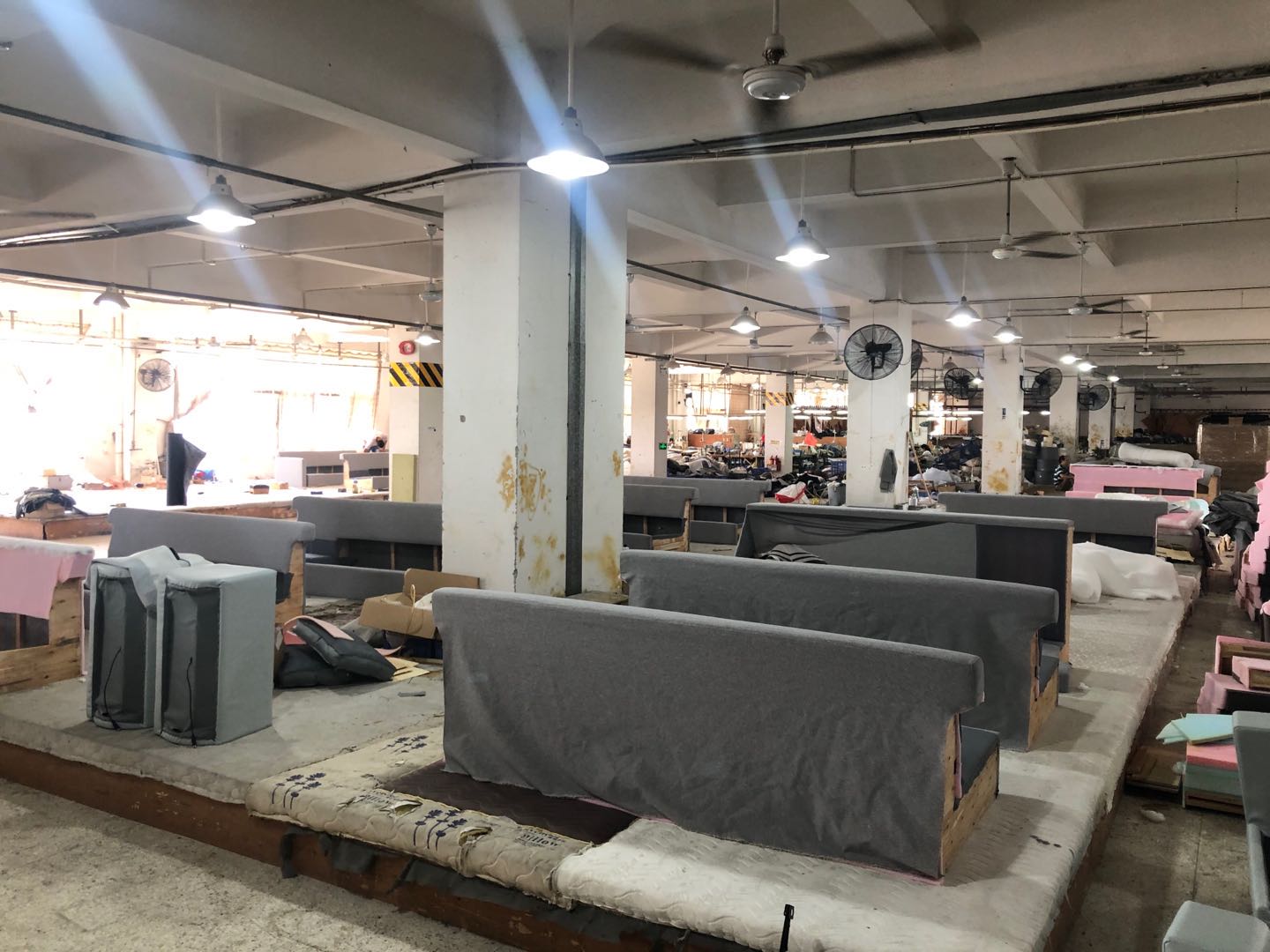
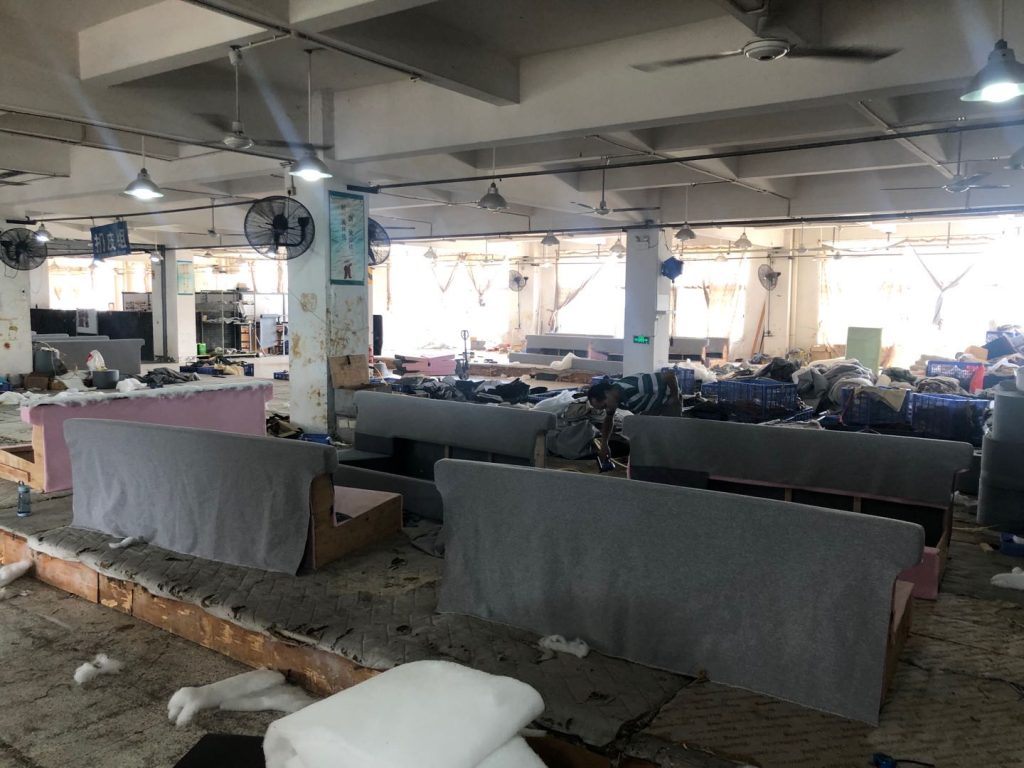
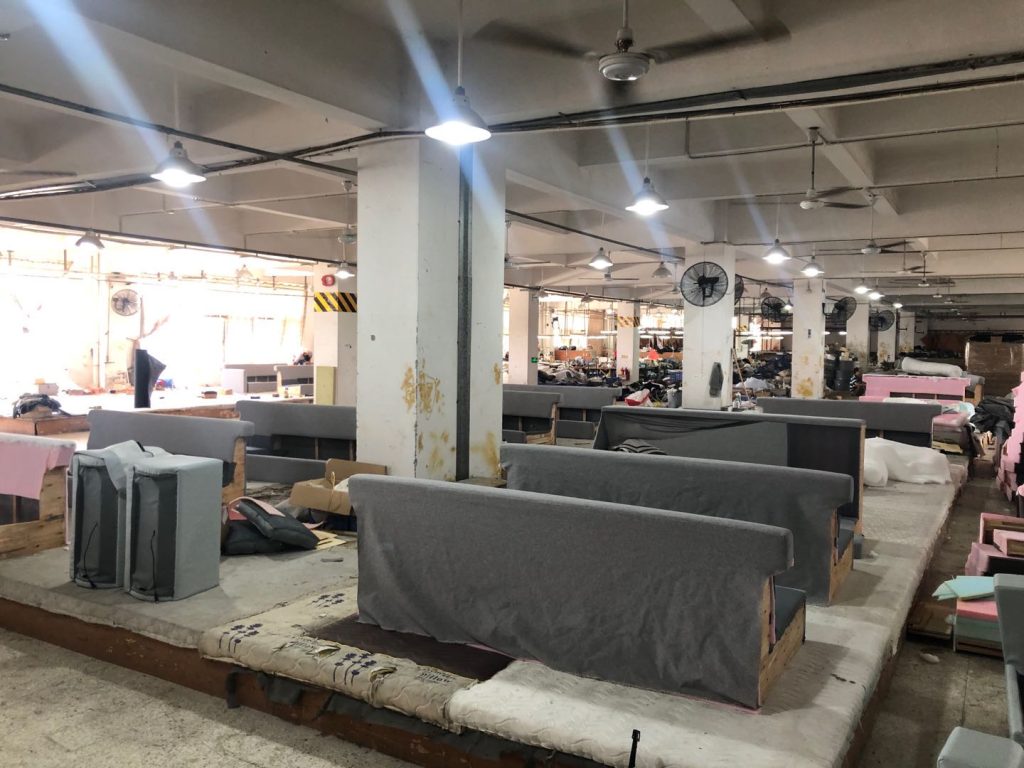
The in-process frames show how the approved cover is fitted over the wood structure and foam. The production inspection should verify alignment, tension, corner treatment, staple or fixing security, visible surface quality and the fit of removable components before the unit is closed.
Flame Performance and Fabric Durability Requirements
The buyer required flame-retardant testing for the fabric and upholstered furniture construction. For hotel furniture, the test plan should identify the applicable Canadian or project-specified method, the complete construction being assessed, conditioning requirements, and the report or certification that supports the final configuration.
The fabric brief also included abrasion testing, stain-resistance performance and antimicrobial treatment. These are separate performance questions: abrasion relates to surface wear under repeated use; stain resistance relates to the agreed spill and cleaning protocol; and antimicrobial treatment requires a defined chemical treatment, test method, durability statement and care limitation. They should be recorded separately in the approval matrix.
Baotian’s release process should therefore retain the approved fabric swatch, supplier technical sheet, treatment declaration, test reports where required, color reference and the final upholstery construction. If a fabric or foam is substituted, the change should trigger a new document review before bulk production.
Assembly Checks for Sofa-Bed Formats
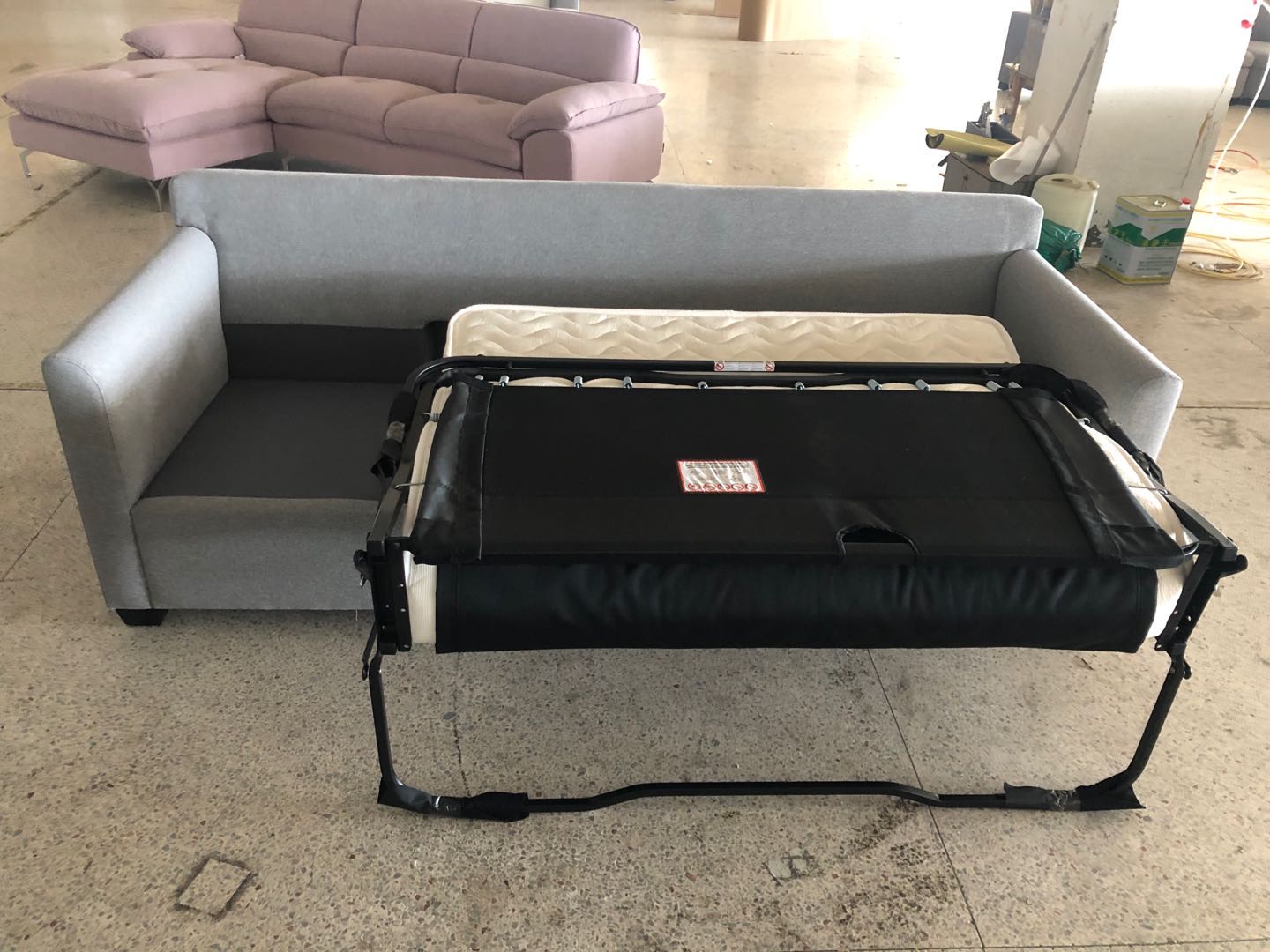
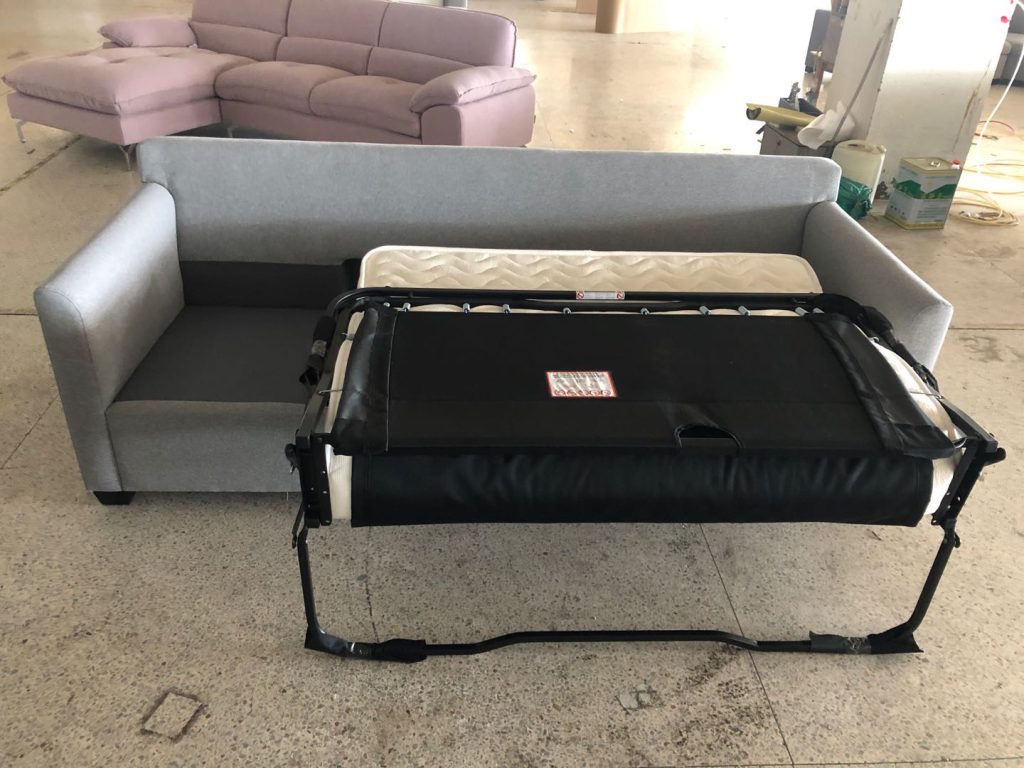
One supplied image shows the sofa-bed opened with its metal mechanism and mattress visible. For a hotel room, the inspection should cover opening and closing force, clearance, mattress fit, sharp-edge protection, hardware security, alignment and the final closed appearance. These checks complement the fabric and upholstery testing; they do not replace it.
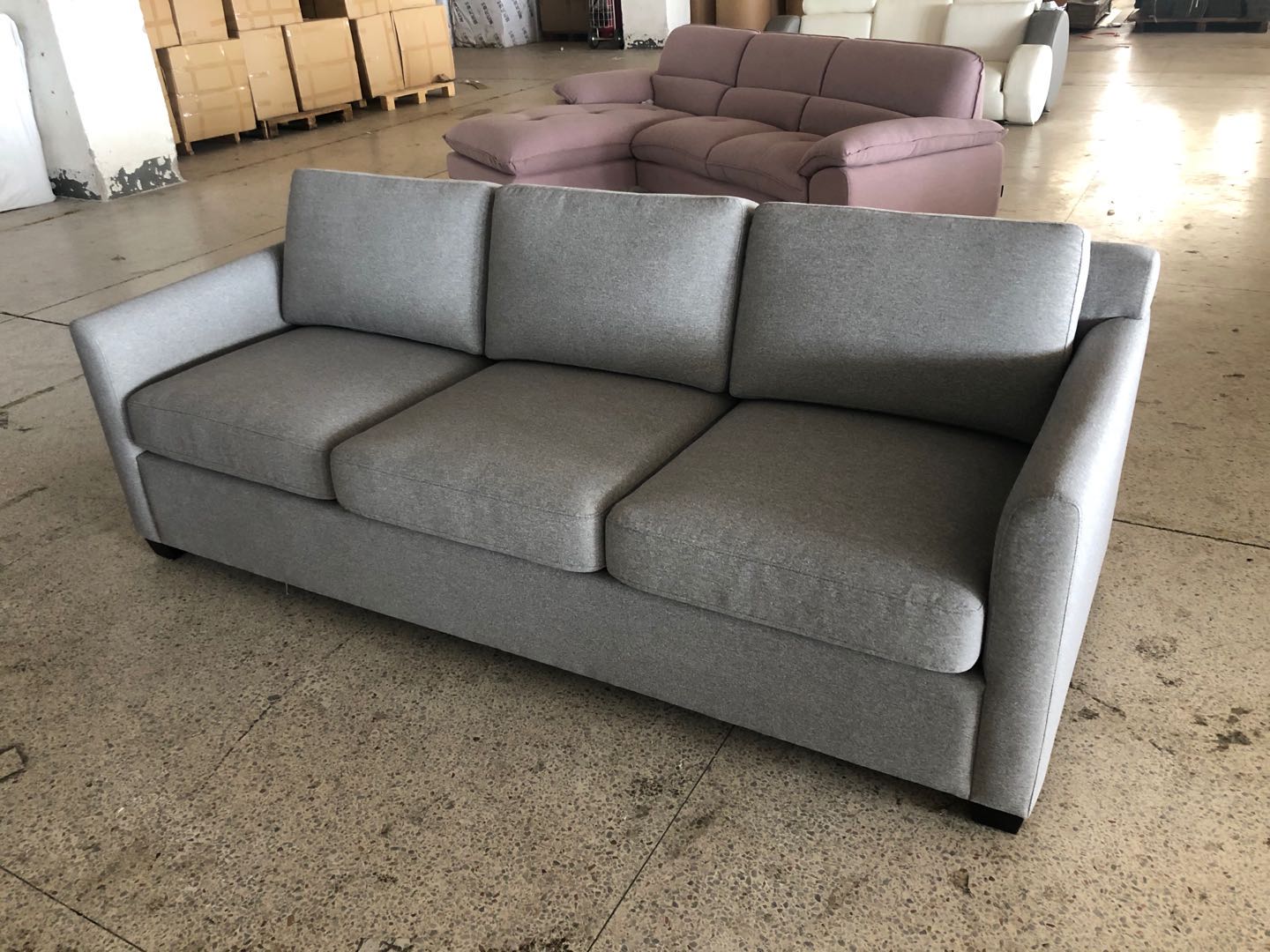
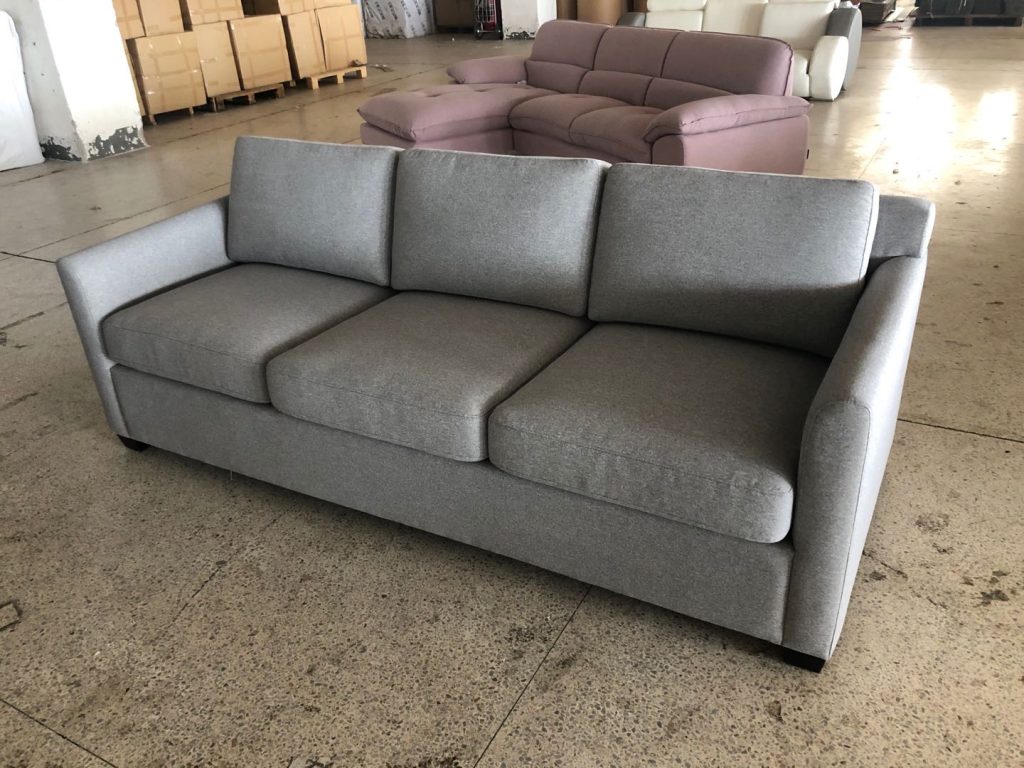
Finished samples provide the reference for color, seam lines, cushion fit, arm and back alignment, leg position and overall proportions. For a repeated 38-room order, the approved sample should be retained as the master reference for production and final inspection.
Recommended Inspection and Release Records
- Approved drawing, upholstery pattern and room-by-room quantity schedule.
- Fabric code, composition, color reference, abrasion result and stain-care instructions.
- Flame-performance scope for the fabric and complete upholstered construction.
- Antimicrobial treatment declaration, test method, durability statement and care limitations.
- Foam, frame, mechanism and hardware specifications, including approved substitutions.
- First-off sample approval, in-process inspection photographs and final random checks.
- Packaging, carton marks, room or model identification and loading records.
This record structure gives the hotel buyer an auditable path from material approval to finished-room furniture. It also makes corrective action more precise if a batch, component or upholstery detail needs review.
What This Project Demonstrates
The supplied production photographs demonstrate an active upholstered-furniture workflow and the importance of checking the product at multiple stages. The project brief demonstrates how a hotel order combines fire performance, wear resistance, cleanability and hygiene-related material requirements with repeatable production for multiple rooms.
They do not, by themselves, prove a particular test pass, certificate, antimicrobial efficacy level or Canadian regulatory approval. Those claims should be made only against the named report, approved construction and applicable destination requirement in the buyer’s project file.
Planning a Canadian Hotel Furniture Program?
Send the room count, furniture schedule, drawings or reference images, upholstery codes, expected use, cleaning protocol, required flame and durability tests, destination and delivery date. Baotian can review the specification, coordinate samples and prepare a traceable production and inspection plan.
Factory Production Gallery
The gallery below follows the visible production sequence from prepared frames and cut covers through upholstery assembly, sewing and finished furniture review.
How to assess this project example
For a comparable project review, send drawings, quantities, destination and required documentation through our project enquiry form.
Plan a similar hospitality project
This case study illustrates Baotian’s project workflow. For a comparable requirement, provide drawings or reference images, quantities, destination, target completion date and any finish, packaging or compliance requirements.
Continue your research
Start a project inquiryRelated Furniture Procurement Resources
Use these resources to turn the article topic into a clear product specification, supplier review or project quotation.