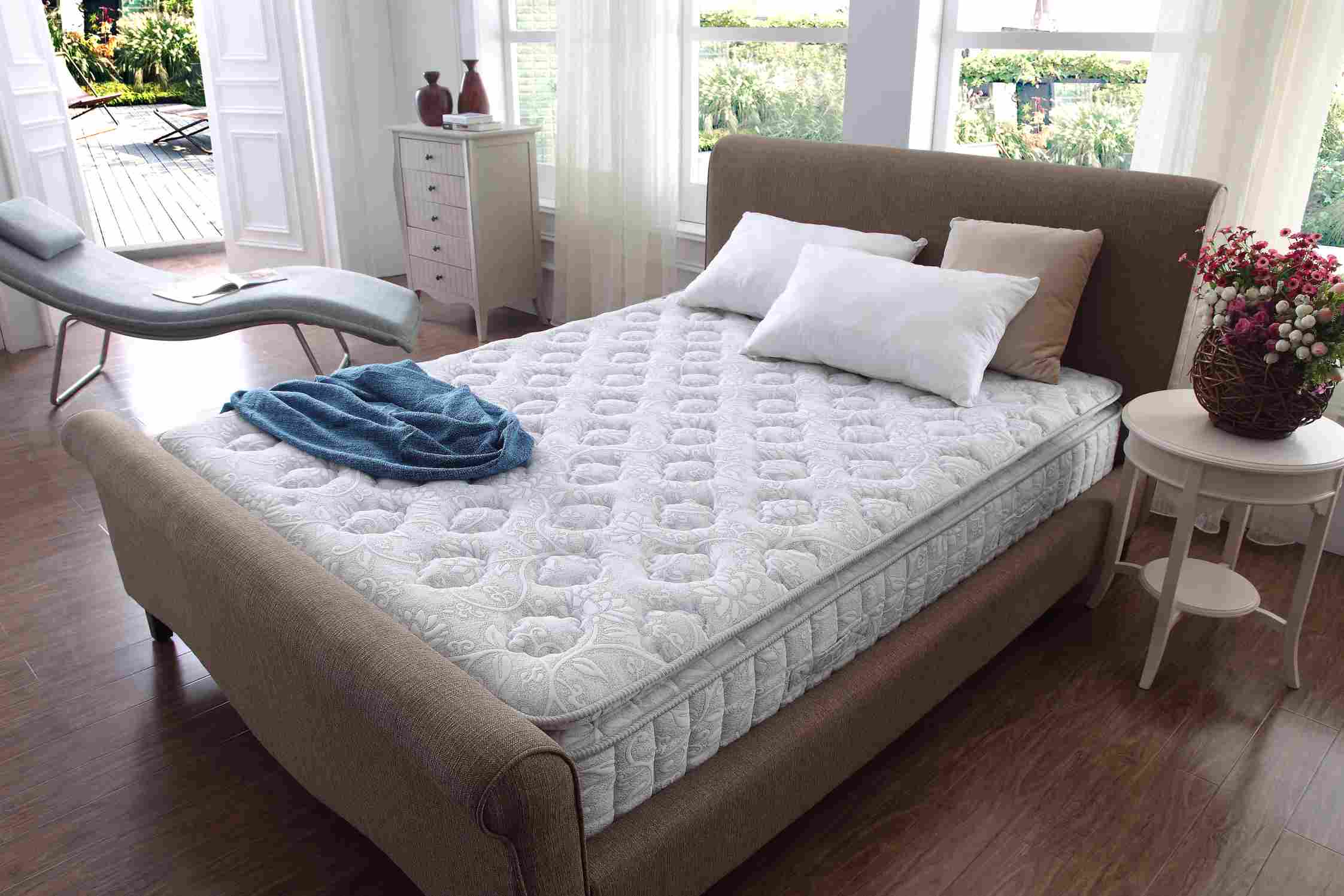
A hotel mattress is a service item as much as a bedroom product. The correct specification must balance guest comfort, housekeeping routines, expected occupancy, bed base compatibility, material documentation and the destination market’s requirements. A brief that simply asks for a “five-star mattress” leaves too much open to interpretation.
Confirm the complete bed system first
Begin with the sleeping dimensions, base type, headboard or bed-frame relationship, elevator and corridor limitations, and whether the mattress needs handles, labels or special packing. A mattress that performs well on one base may feel different on another, so the construction should be reviewed with the intended foundation in mind.
- Mattress width, length and finished height tolerance
- Bed base construction and support spacing
- Target guest profile and occupancy pattern
- Single-sided or reversible construction
- Required labels, care instructions and packing format
Describe construction rather than using vague quality labels
Ask the supplier to identify the spring system, comfort layers, edge support, ticking and quilting approach. For example, individually pocketed springs can provide localized response and reduce movement transfer, while a reversible construction permits a Head-to-Toe and Flip maintenance routine. Neither feature should be treated as a blanket performance guarantee: comfort and service life depend on the full approved build and real operating conditions.
Set a sampling and comfort-approval method
Comfort is subjective, so approval should be structured. Specify who will assess the sample, how feedback will be recorded and whether the reference is a finished sample, a sectional build or a pre-production unit. Photograph labels and record the agreed layer references so the approved sample can be connected to the production specification.
| Decision point | What to record |
|---|---|
| Comfort | Target feel, reviewer feedback and comparison reference |
| Construction | Approved spring, filling, ticking, quilting and edge-finish references |
| Serviceability | Rotation method, care instructions, compatible base and expected occupancy |
| Documentation | Required material declarations, test scope, labels and packing records |
Keep fire, hygiene and chemical claims tied to evidence
Where a project requires a particular fire-performance assessment, low-VOC adhesive, OEKO-TEX documentation, traceability declarations or anti-mite/antimicrobial treatment, list the requirement in the technical schedule. The buyer should then confirm that the final fabric, filling and complete mattress configuration are covered by the relevant assessment and documents. A component statement is not automatically proof for a completed product.
Plan maintenance before the first guest arrives
For a reversible mattress, write the rotation plan into the property’s housekeeping or engineering routine. Head-to-Toe means rotating the mattress end for end; Flip means changing to the opposite sleep surface. Rotation records help the operator distribute wear and investigate concerns consistently. The final service-life expectation should be stated as a project target, not as an unconditional outcome.
Editorial note
This article is informed by the review points used when preparing contract mattress programs. It does not replace a market-specific fire test, chemical assessment, warranty agreement or hotel operating procedure. See our hotel mattress buying guide for a broader supplier-evaluation framework.
Planning a project mattress? Share dimensions, intended use, quantity, comfort direction and documentation scope via our enquiry form.
Related Furniture Procurement Resources
Use these resources to turn the article topic into a clear product specification, supplier review or project quotation.