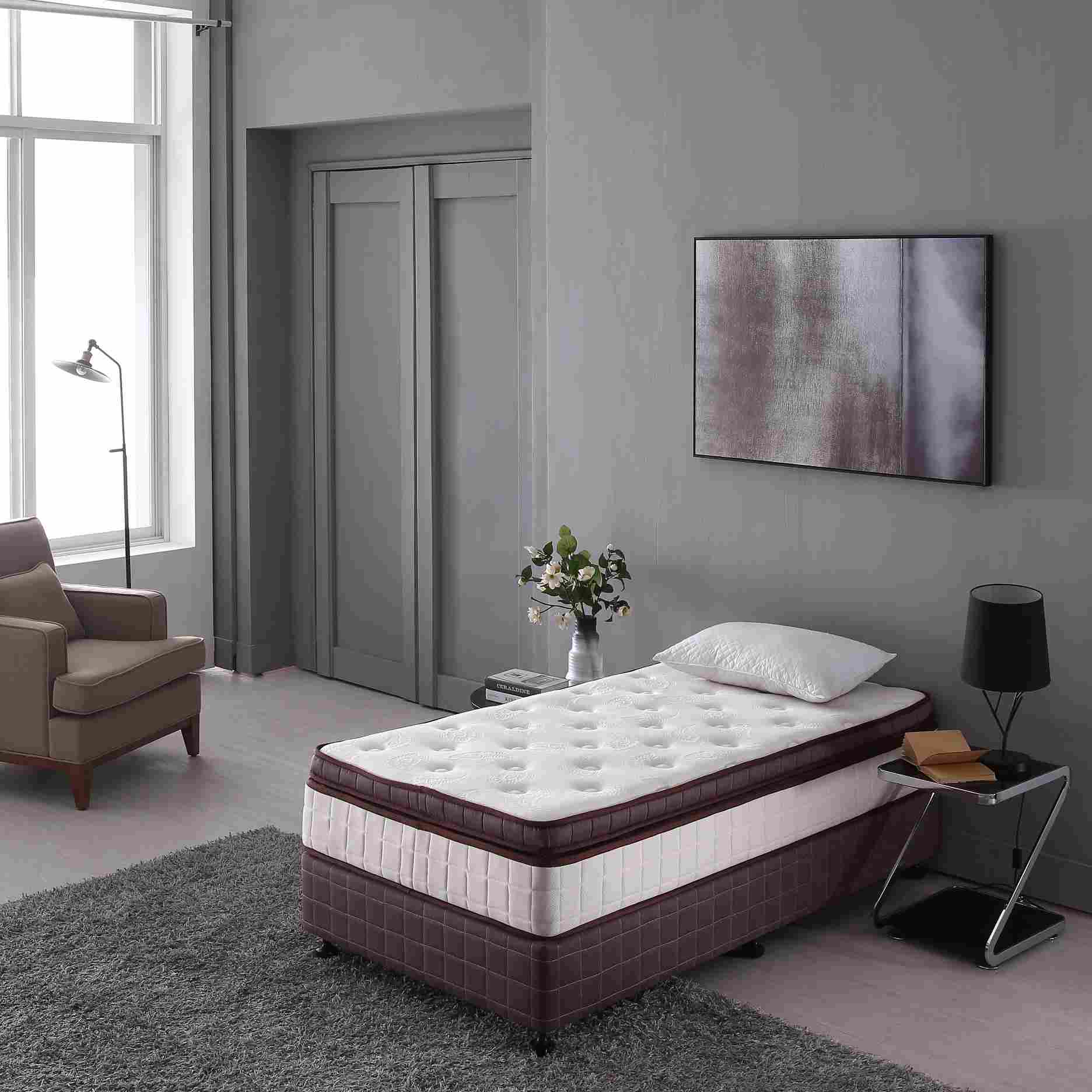
A Hot Mattress Generates More Complaints Than a Firm One
Temperature is the most common sleep complaint in hotels after noise and firmness. Guests in warm climates, hotels without individual room climate control, and properties with heavy bedding all report that the mattress “sleeps hot.” For procurement, hotel mattress cooling and breathability should be designed into the mattress construction, not left to the air conditioning system to solve.
Cooling Technologies in the Comfort Layer
Gel-infused memory foam disperses heat through thermally conductive gel particles embedded in the foam matrix. It typically reduces the sleeping surface temperature by 1—3°C compared to standard memory foam. The gel can be added as liquid infusion during the foaming process or as gel beads. Liquid-infused gel is more consistent in cooling performance across the mattress surface.
Phase-change materials (PCMs) absorb body heat when the guest is warm and release it when the body temperature drops during deeper sleep. PCMs are typically applied as a coating on the mattress cover or integrated into the top foam layer. They are effective but add cost — expect a 15—25% price premium for PCM-treated covers. For luxury and resort hotels, this premium is justified by the guest experience difference.
Airflow Design Through the Mattress Core
Open-cell foam has a more porous internal structure than closed-cell foam, allowing air to move through the comfort layer rather than trapping it. Highly breathable foam comfort layers reduce the “sleeping hot” sensation without adding gel or PCM cost. The support core also matters: pocket coil systems naturally allow airflow between springs, while solid foam cores block air circulation. For hot-climate hotels, a hybrid mattress — open-cell foam over pocket springs — is often the best performance-to-cost solution.
Some manufacturers add vertical ventilation channels or perforated foam layers to increase air exchange. These features work but must be verified: ask for airflow test data rather than relying on marketing descriptions alone.
Cover Fabrics for Temperature Management
The mattress cover is the first surface the guest touches, and it plays a significant role in perceived temperature. Cotton covers feel cooler than polyester because cotton is more breathable and absorbs moisture better. Tencel and bamboo-derived fabrics offer a cool-to-the-touch sensation and wick moisture effectively, making them popular for resort and luxury hotels. Knitted covers are generally more breathable than woven covers because of their open loop structure.
Cooling Strategy by Climate and Property Type
- Tropical and desert resorts: gel-infused foam + PCM cover + pocket coil core
- City business hotels: open-cell foam + cotton or Tencel cover + hybrid core
- Budget and economy hotels: open-cell foam + breathable polyester cover
- Test cooling performance with actual bedding — the sheets, duvet, and mattress pad all affect perceived heat
- Request foam density, airflow rate, and cover composition in the purchase order
Explore Baotian hotel mattresses with cooling technology options for warm-climate and premium properties.
Related Furniture Procurement Resources
Use these resources to turn the article topic into a clear product specification, supplier review or project quotation.