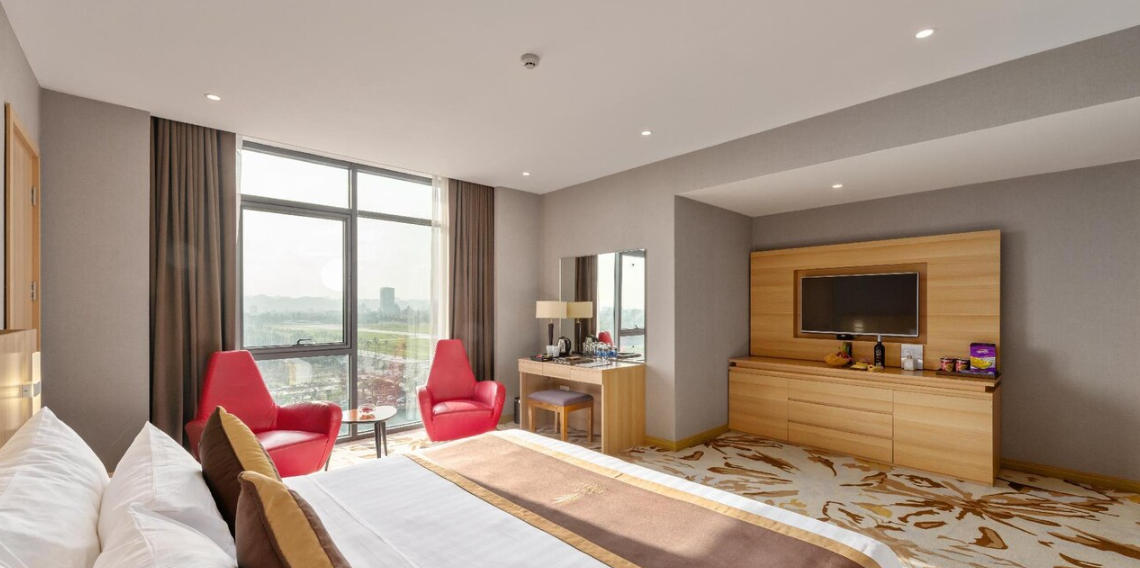
Buying custom hotel furniture from China is a controlled project process, not simply a request for a catalogue price. The buyer and manufacturer need a shared specification, approval milestones and a delivery plan that covers materials, inspection, packing and destination requirements. This guide outlines the information that makes an OEM project easier to quote and manage.
1. Prepare a decision-ready RFQ
Start with product drawings or reference images, dimensions, materials, finishes, quantity by model, destination, target schedule and required documents. Identify which details are fixed and which can be value-engineered. A clear RFQ lets suppliers compare the same scope instead of returning incompatible assumptions.
2. Separate design intent from manufacturing details
Reference images explain the look, but they rarely define construction. Add the required frame, foam, spring, hardware, upholstery, finish, edge, stitching and packaging details where they matter. Ask the supplier to list assumptions and exclusions in the quotation.
3. Compare the supplier’s project capability
Look for evidence that the supplier can support sampling, production, inspection, packing and export loading under one coordinated process. Review factory information, relevant product categories, quality-control records and comparable case studies. Baotian’s hotel furniture manufacturing page and project case studies provide a framework for this review.
4. Approve a representative sample
The sample should test the decisions that create risk: dimensions, comfort, finish, fabric, mechanism, color, hardware and assembly. Record the approved sample with photos, material codes and a specification sheet. Do not approve a mass-production order from a quotation image alone.
5. Lock the production specification
After sample approval, consolidate the final product drawing, bill of materials, finish schedule, labeling, quantity and packing instruction. If a material or construction changes, document the change and agree whether a new sample or test is required.
6. Define quality control before production
Inspection points may include incoming materials, dimensions, stability, upholstery, seams, surface finish, mechanisms, hardware, labeling and final packing. The buyer and supplier should agree what is checked, when it is checked and how non-conformities are recorded. See the furniture quality-control workflow for a practical structure.
7. Plan packaging and container loading
Export furniture needs protection that matches the product and route. Confirm corner protection, moisture control, carton strength, labels, loading orientation and whether the container plan is based on approved item dimensions. Baotian’s packaging and container-loading guidance is useful when preparing the shipping brief.
8. Manage schedule and payment milestones
Build the schedule around drawing approval, material confirmation, sampling, production, inspection, packing and loading. Payment milestones should correspond to these deliverables and the contract should state what happens when approvals or materials are delayed.
9. Confirm destination-market documents
State the required fire, chemical, structural or environmental documents before sampling. Confirm the named legal entity, product or material scope, standard, test date and validity. A certificate for a company or a different product should not be treated as proof for the final hotel furniture item.
10. Build a repeatable supplier relationship
Keep the approved drawings, sample records, inspection reports, packing photos and shipment documents together. A repeatable record helps with future room phases, replacement orders and model updates. It also makes a new quotation faster and more comparable.
For a project review, send the product list, reference images, dimensions, quantity, destination, required tests and target schedule through the OEM/ODM quotation form.