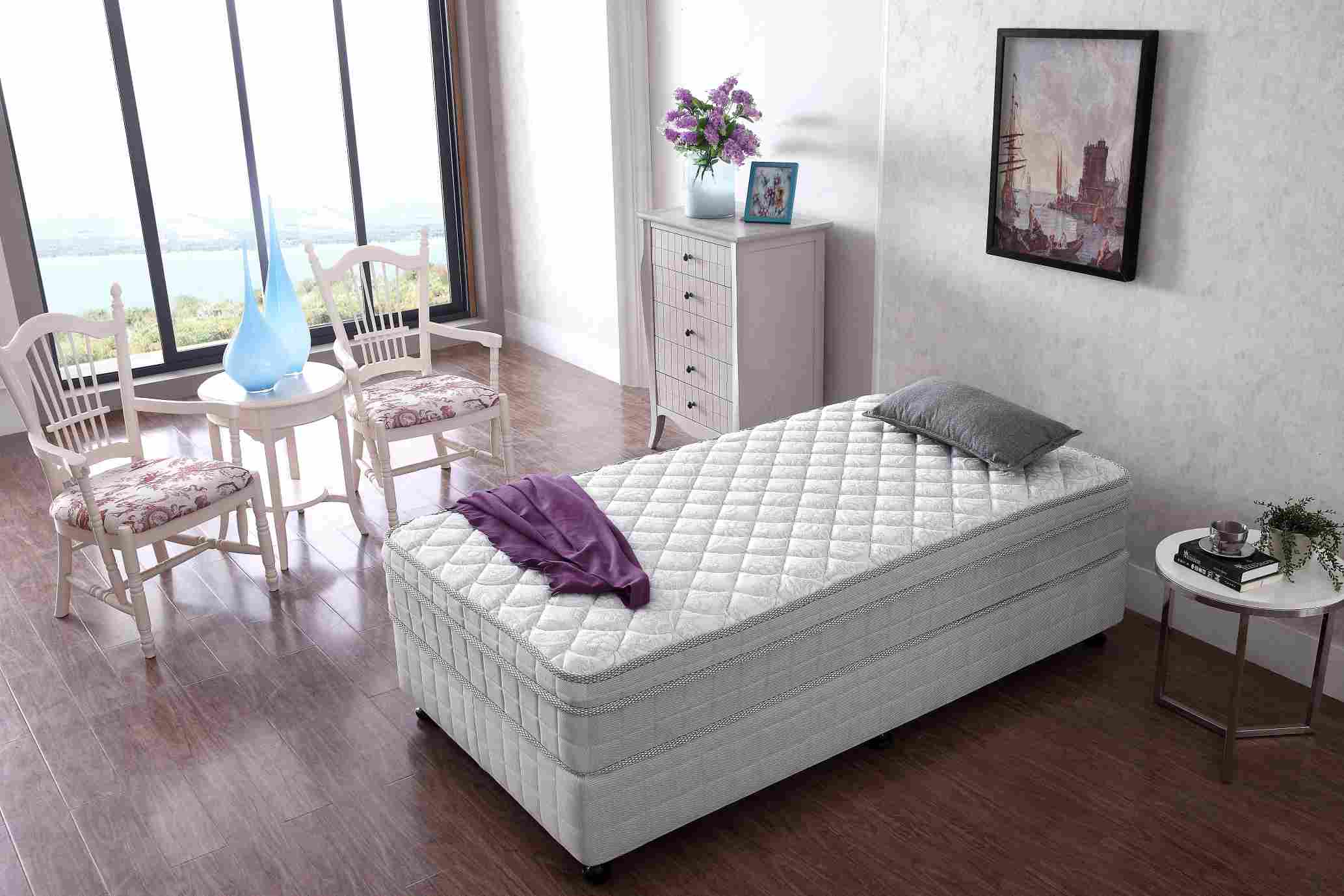
A hotel mattress is a repeat-use product with direct impact on guest comfort, housekeeping routines and replacement cost. The most reliable procurement brief connects the sleep experience to measurable construction and documentation requirements. It should leave no uncertainty about the mattress that will be sampled, tested, packed and supplied at scale.
Define the room and size program
List mattress sizes by room type and market: for example, twin, full, queen, king or a local equivalent. Confirm the finished mattress dimensions, allowable tolerance, foundation or bed-frame compatibility and any split configuration. A size schedule prevents a visually similar but dimensionally incorrect sample from being approved.
Choose the construction for the operating model
Pocket spring, Bonnell spring, foam and hybrid constructions create different support, motion-transfer and handling characteristics. Select based on property tier, expected occupancy, maintenance policy and target lifespan. Ask the supplier to document the layer sequence, coil or foam specification, edge support and cover construction.
Specify firmness in a usable way
Words such as medium or firm are interpreted differently by suppliers. Add a measurable target or approved reference sample, plus the intended guest profile and property positioning. Where a project uses different firmness levels, identify them by room type and label the approved sample clearly.
Review cover and hygiene requirements
Specify the cover fabric, quilting, zipper or non-removable construction, cleaning expectations and replacement availability. Consider stain resistance, breathability, noise, moisture management and how the housekeeping team will rotate or protect the mattress. If a mattress protector is part of the system, test the complete combination.
Handle fire and compliance documents carefully
Fire requirements vary by destination, property and material. State the required standard, test method, report language and named product or material. Confirm that the report applies to the final cover, foam, spring construction and treatment used in production. Baotian’s certification and documentation guide explains the checks buyers should make before approval.
Use sampling to validate the complete specification
The sample should be reviewed for dimensions, firmness, edge support, cover appearance, stitching, odor, labels and packing. Record deviations and issue a signed specification sheet. If the supplier changes a layer, fabric or treatment, treat it as a new approval point rather than an informal substitution.
Plan packing, storage and delivery
Confirm whether the mattresses ship flat, compressed or rolled, the allowed storage period, carton labeling, moisture protection and container loading method. The delivery plan should include unloading access and room-by-room distribution. Storage conditions can affect the product even when manufacturing is correct.
Budget for replacement, not only first cost
Compare warranty assumptions, replacement cover availability, model continuity, minimum order quantity and lead time. A slightly higher initial specification may reduce guest complaints and replacement disruption. For a practical starting point, review Baotian’s hotel mattress range and hotel mattress supplier comparison.
Information to include in an RFQ
- Room types and finished sizes
- Construction and layer requirements
- Firmness target and approved reference
- Cover, quilting and cleaning requirements
- Fire, chemical and performance documents
- Quantity, delivery phases and destination
- Packing, storage and labeling requirements